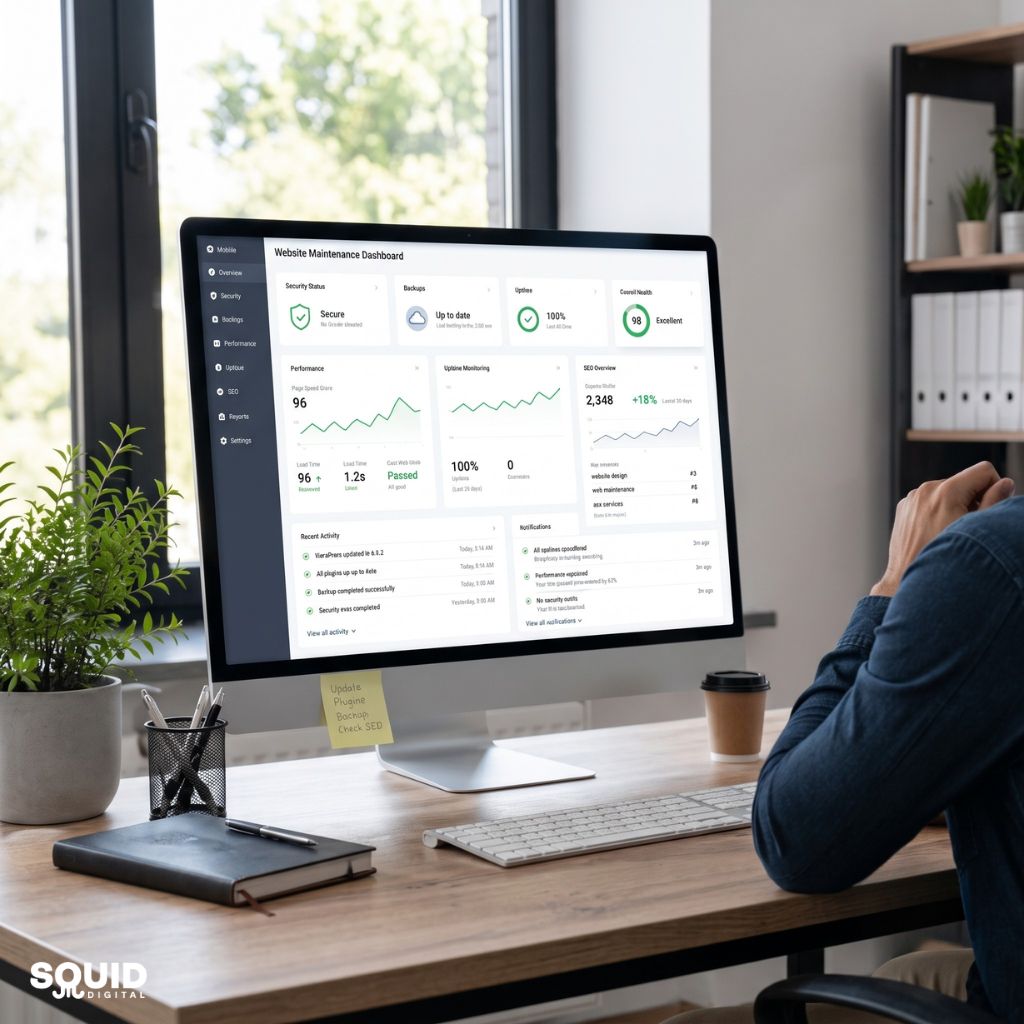


Why “Set and Forget” Websites Don’t Work
Your website isn’t a brochure you can print once and forget about — it’s a living, breathing part of your business. It helps people find you, builds trust, and turns visitors into customers.
But here’s the truth: a website isn’t something you launch and leave. It needs regular care and updates to stay effective. Why? Because your business evolves, your customers’ needs change, and Google’s algorithm never stops moving.
Let’s look at why ongoing website maintenance is so important — and what happens when you don’t keep your website updated.
1. Your Business Keeps Growing — Your Website Should Too
Your business changes all the time. Maybe you’ve added new services, launched new products, or refined your messaging. If your website hasn’t evolved with you, it might be sending the wrong message.
Your homepage copy, visuals, and calls to action (CTAs) should always reflect your current goals. A site that feels outdated can make even a thriving business seem inactive.
Tip: Review your homepage content every six months. Updating your copy, replacing old images, and adjusting your CTAs helps your website stay relevant — and helps your audience connect with who you are today.
2. User Expectations Change Fast
What worked for web visitors two years ago might frustrate them today. People expect faster load times, smoother navigation, and mobile-friendly layouts. If your site feels clunky or confusing, visitors won’t stick around — they’ll move on to a competitor who makes it easier.
Regular website updates keep your design modern, your navigation simple, and your experience enjoyable.
Think of it like refreshing your store window display — the more inviting it looks, the more customers you’ll attract.
3. Google Rewards Fresh, Relevant Websites
If you want your website to rank well on Google, you can’t ignore ongoing SEO maintenance. Search engines love fresh, high-quality, and relevant content.
When you update your keywords, refresh blog posts, and fix technical SEO issues, you’re telling Google your website is active and trustworthy. On the other hand, outdated keywords or stale content can quietly lower your rankings.
Tip: Audit your website’s SEO at least twice a year. Look for slow pages, broken links, or outdated keywords — these small fixes can have a big impact on your visibility.

4. Neglect Can Lead to Bigger (and Costlier) Problems
Skipping website maintenance doesn’t just hurt your SEO or design — it can affect your site’s security and stability.
Outdated plugins, broken scripts, or missed security updates can make your website vulnerable to bugs or even cyberattacks. Fixing those issues later can cost far more than regular upkeep would.
Tip: Schedule a routine website check-up every month. It’s the easiest way to avoid downtime, protect your data, and keep your site performing at its best.
5. Your Website Should Grow With You
Your website should reflect where your business is today, not where it was when you first launched. As your goals evolve, your website should adapt — showcasing your latest work, promoting new offers, and improving how people interact with your brand.
Small, consistent updates can go a long way:
- Refreshing visuals and copy
- Adding new landing pages
- Updating contact forms or CTAs
- Improving load speed and accessibility
A website that grows with your business becomes one of your most valuable long-term marketing tools.
Conclusion
A “set and forget” website simply doesn’t work anymore. The online world moves too fast — and your audience expects more.
Regular website maintenance keeps your site looking good, running fast, and ranking well. It helps your business stay visible, relevant, and trustworthy — exactly what you need to stand out online.
Your website should grow with your business, not lag behind it. With a little ongoing attention, it’ll keep driving results long after launch day.
Our team can help you update, optimise, and maintain it for lasting results. Contact us!