


Information Architecture for Lead Gen: From Sitemap to Sales Conversation
Visitors arrive with questions. Your IA either answers them quickly or adds friction. Great IA feels invisible because it mirrors the buyer’s mental model.
Start with jobs‑to‑be‑done
List the questions prospects need answered before they enquire: outcomes, proof, pricing approach, process, risks, timelines. Map each to a page or section.
Build the hub‑and‑spoke
- Hubs for core services or problems.
- Spokes for sub‑services, industries, or use cases.
- Guides for complex decisions (playbooks, calculators, checklists).
Navigation principles
- Fewer top‑level items; descriptive labels.
- Persistent CTA in the header.
- Footer as a secondary navigator and trust anchor.
Content patterns that convert
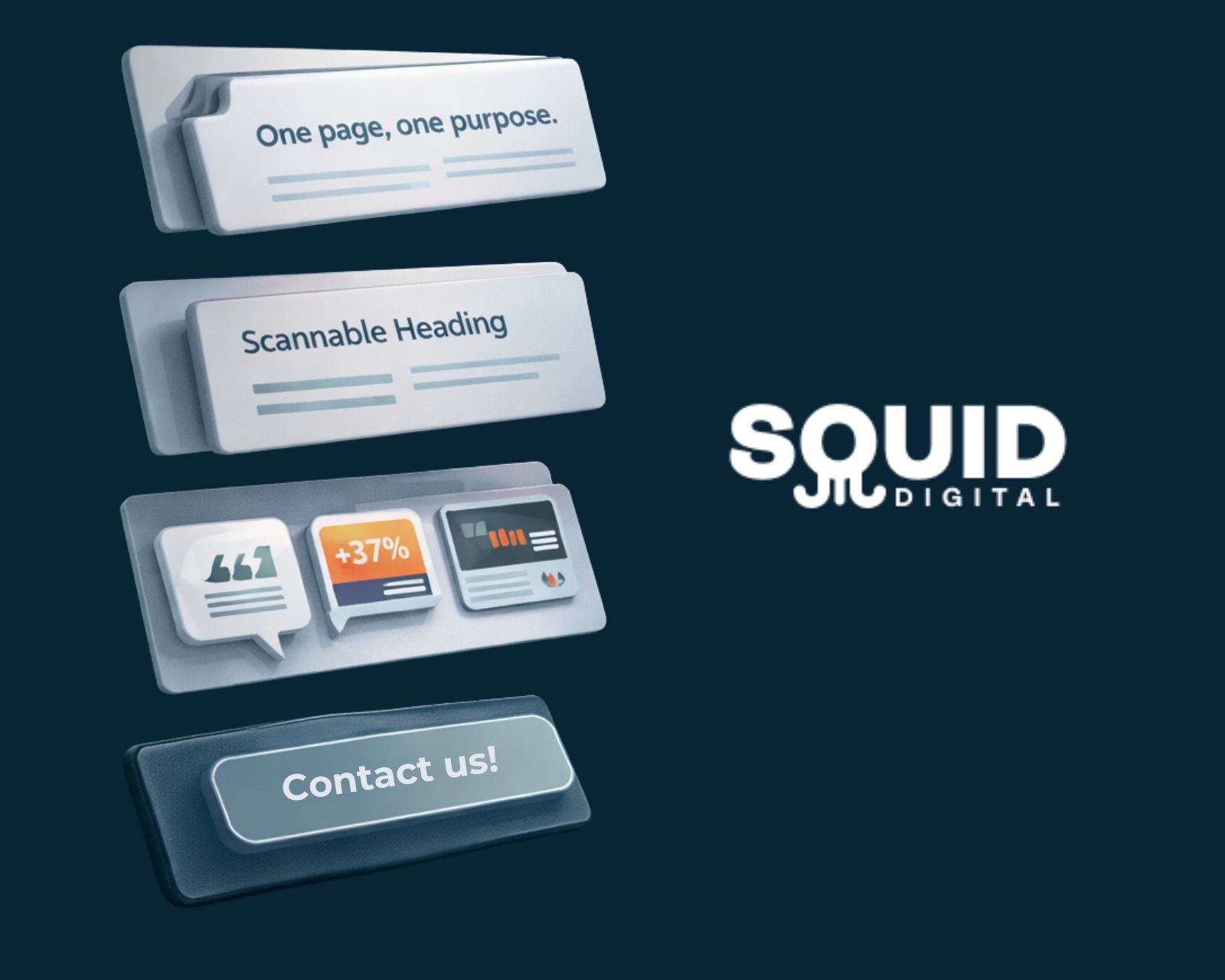
- One page, one purpose.
- Use scannable headings and short paragraphs.
- Pair every claim with proof (quote, metric, screenshot).
- End with a single, specific CTA.
Final thoughts
Information architecture isn’t a visual exercise — it’s a revenue one. When your pages are organised around real buyer questions, visitors don’t need to work to understand what you do or why it matters. They move naturally from curiosity to confidence to conversation. If your sitemap can guide a first-time visitor to the right answer in seconds, your sales team will feel it in better-qualified enquiries and shorter sales cycles.
Want an IA sketch for your site? We’ll draft a one‑page map you can build from.