


Essential Technical SEO Guide for Growing Businesses
Technical SEO plays a critical role in helping growing businesses improve online visibility, website performance, and long-term search rankings. While content and keywords often receive the most attention, technical SEO creates the foundation that allows search engines to properly crawl, understand, and rank a website.
For many businesses, technical issues quietly limit growth without being immediately obvious. Slow-loading pages, indexing problems, poor mobile usability, and broken site structures can reduce traffic and lower conversions even when the business offers excellent products or services.
As search engines continue prioritising user experience and website quality, technical SEO has become increasingly important for both small businesses and expanding brands. A technically strong website not only supports better rankings but also improves customer trust and engagement.
This guide explains what technical SEO means, why it matters for growing businesses, and how to implement practical improvements that support sustainable search growth.
What Technical SEO Actually Means for Modern Businesses
Technical SEO refers to the process of optimising a website’s technical foundation so search engines can efficiently crawl, index, and understand its content.
Unlike content SEO, which focuses on keywords and copywriting, technical SEO focuses on website infrastructure and performance. It ensures search engines can access pages correctly while also improving user experience.
Defining Technical SEO in Simple Terms
Technical SEO is the behind-the-scenes optimisation of a website. It includes areas such as website speed, mobile responsiveness, site structure, security, and indexing.
In practical terms, technical SEO helps:
- Search engines discover pages faster
- Websites load more efficiently
- Users navigate more easily
- Businesses avoid ranking issues caused by technical errors
The Core Areas of Technical SEO
Several core components influence technical SEO performance:
- Website speed and loading performance
- Mobile usability and responsiveness
- Crawlability and indexation
- HTTPS website security
- Structured data and schema markup
- Internal linking and site architecture
Each element contributes to how search engines evaluate website quality and usability.
Why Growing Businesses Often Overlook Technical SEO
Many businesses focus heavily on design, advertising, or social media while overlooking technical optimisation. This often happens because technical SEO feels less visible compared to content marketing or paid ads.
Common reasons include:
- Older websites built without SEO considerations
- Excessive plugins slowing down the website
- Lack of internal technical expertise
- Redesigns prioritising visuals over performance
Over time, these issues create technical debt that becomes harder and more expensive to fix later.
Why Technical SEO Has a Direct Impact on Business Growth
Technical SEO directly affects how visible, usable, and scalable a website becomes. A strong technical foundation supports both rankings and conversions.
How Technical SEO Supports Organic Visibility
Search engines rely on technical signals to determine whether pages should appear in search results. Even high-quality content may struggle to rank if technical problems exist.
Technical SEO helps by:
- Improving crawl efficiency
- Reducing indexing issues
- Helping search engines understand content structure
- Strengthening page relevance signals
For growing businesses, this means more opportunities to appear in organic search results.
User Experience Signals That Affect Rankings
Google increasingly rewards websites that provide fast, stable, and mobile-friendly experiences.
Poor performance can increase bounce rates and reduce engagement. Slow websites also create frustration for users who expect quick access to information.
Key user experience factors include:
- Fast loading speeds
- Mobile responsiveness
- Easy navigation
- Stable page layouts
- Secure browsing experience
The Business Risks of Poor Technical SEO
Technical issues often create hidden revenue loss.
For example:
- Broken pages reduce trust
- Slow websites decrease enquiries
- Duplicate content weakens rankings
- Poor mobile usability limits conversions
Many businesses only discover these issues after noticing declining traffic or leads.
Technical SEO vs Paid Advertising Costs
| Technical SEO Benefit | Business Impact |
|---|---|
| Faster website performance | Higher conversion rates |
| Better crawlability | More indexed pages |
| Improved mobile usability | Better user engagement |
| Strong site structure | Easier content scalability |
| Reduced technical errors | More stable rankings |
Unlike paid advertising, technical SEO improvements continue providing value over time without requiring constant ad spend.
The Essential Technical SEO Foundations Every Website Needs
Technical SEO starts with strong website fundamentals.
Website Speed and Core Web Vitals
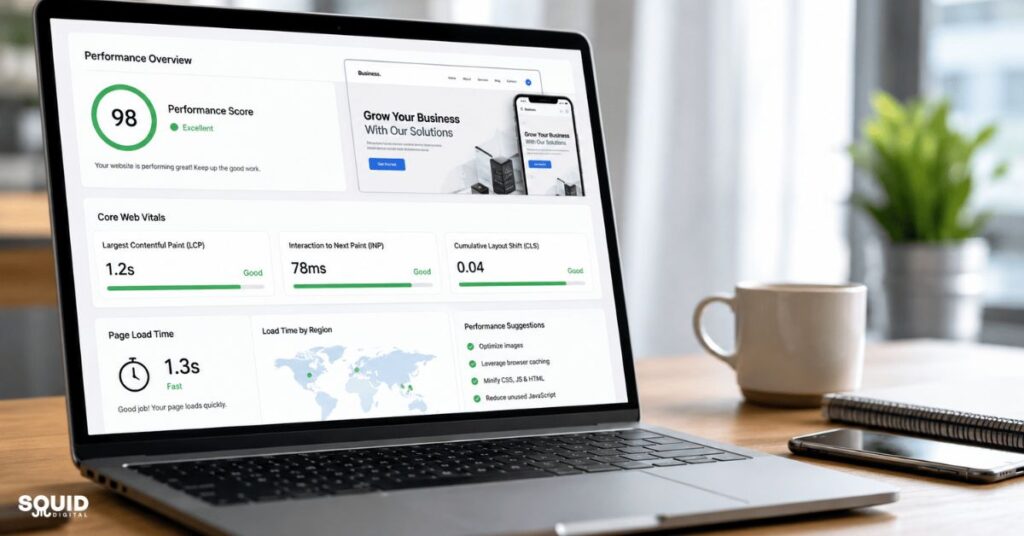
Website speed remains one of the most important technical SEO factors. Google’s Core Web Vitals measure real-world user experience performance.
The main metrics include:
- Largest Contentful Paint (LCP)
- Interaction to Next Paint (INP)
- Cumulative Layout Shift (CLS)
Slow-loading pages negatively affect both rankings and user behaviour.
Common causes of poor performance include:
- Oversized images
- Excessive scripts
- Poor hosting quality
- Heavy WordPress themes
Mobile-First Website Optimisation
Google primarily evaluates websites using mobile-first indexing. This means the mobile version of a website plays a major role in rankings.
Businesses should ensure:
- Responsive layouts work properly
- Text remains readable on mobile devices
- Navigation is easy to use
- Buttons are mobile-friendly
Mobile usability has become especially important as mobile traffic continues growing across most industries.
Crawlability and Indexation
Search engines must be able to access and understand website pages.
Important technical SEO elements include:
- XML sitemaps
- Robots.txt configuration
- Canonical tags
- Clean internal linking structures
Incorrect settings can accidentally block important pages from appearing in search results.
HTTPS and Website Security
HTTPS encryption protects user data and improves trust.
Modern browsers now warn users when websites are unsecured, which can negatively impact credibility and conversions.
Security issues may also expose websites to malware or spam vulnerabilities that damage SEO performance.
Structured Data and Schema Markup
Structured data helps search engines interpret website content more accurately.
Schema markup can improve:
- Rich search results
- Local SEO visibility
- Product listings
- FAQ appearances
For small businesses, local business schema is often one of the most valuable technical SEO enhancements.
A Practical Technical SEO Checklist for Growing Businesses

Technical SEO becomes easier when approached systematically.
Step-by-Step Technical SEO Audit Process
- Check website indexing
Review whether important pages appear in Google search results and identify missing pages. - Test website speed
Use performance tools to analyse loading speed and Core Web Vitals issues. - Review mobile usability
Ensure the website functions properly across different mobile devices and screen sizes. - Identify broken links and redirects
Fix 404 errors and remove unnecessary redirect chains. - Analyse crawl errors
Review Google Search Console for indexing and crawling problems. - Review duplicate content risks
Check for duplicate URLs, thin pages, or incorrect canonical tags. - Improve internal linking
Strengthen navigation and page relationships to help search engines understand site structure. - Validate structured data
Ensure schema markup works correctly and does not contain errors.
Quick Technical SEO Wins with High Impact
Many businesses can achieve noticeable improvements through relatively simple fixes.
Quick wins include:
- Compressing image file sizes
- Removing unused plugins
- Enabling browser caching
- Updating outdated redirects
- Fixing broken internal links
- Improving hosting performance
Recommended Technical SEO Tools
Popular technical SEO tools include:
- Google Search Console
- Google PageSpeed Insights
- Screaming Frog SEO Spider
- GTmetrix
- Ahrefs Site Audit
- Semrush Site Audit
These tools help identify issues that may not be immediately visible during normal website use.
Quick Recap
Key technical SEO priorities:
- Improve loading speed
- Ensure mobile usability
- Fix crawl and indexing issues
- Maintain strong site structure
- Monitor website performance regularly
Common Technical SEO Mistakes That Limit Business Growth
Technical SEO mistakes can quietly reduce website performance over time.
Slow Websites Caused by Poor Optimisation
Many business websites become overloaded with unnecessary scripts, animations, and plugins.
Common speed problems include:
- Large uncompressed images
- Excessive third-party scripts
- Low-quality hosting environments
- Bloated website themes
Even a delay of a few seconds can significantly reduce conversions.
Technical Problems That Prevent Rankings
Some websites unintentionally block search engines from indexing key pages.
Common indexing issues include:
- Incorrect noindex tags
- Broken canonical implementation
- Duplicate page versions
- Poor URL structures
These issues often occur during redesigns or website migrations.
Mobile Experience Issues
A website may appear functional on desktop while performing poorly on mobile devices.
Common mobile problems include:
- Small buttons and menus
- Difficult navigation
- Intrusive pop-ups
- Poor spacing and readability
As mobile traffic increases, these issues become more damaging.
Migration and Redesign Mistakes
Website redesigns frequently cause traffic losses when SEO considerations are ignored.
Businesses sometimes:
- Remove pages without redirects
- Change URLs incorrectly
- Lose metadata during migration
- Break internal links
Proper planning helps prevent these costly mistakes.
Ignoring Ongoing Technical Maintenance
Technical SEO is not a one-time project.
Websites continuously evolve through:
- Plugin updates
- Content additions
- Platform changes
- Search engine algorithm updates
Regular monitoring helps businesses catch problems early before rankings decline.
Real-World Example: How Technical SEO Improves Business Performance

Example Scenario — Local Service Business Website
A growing local service business experienced declining enquiries despite publishing new content regularly.
Initial Problems
The website had:
- Slow mobile loading times
- Multiple indexing issues
- Poor internal linking
- Large image files
- Outdated plugins
Bounce rates were high, particularly on mobile devices.
Technical SEO Improvements Implemented
The business implemented several technical SEO improvements:
- Compressed large images
- Fixed crawl and sitemap issues
- Improved internal linking
- Added local business schema markup
- Reduced unnecessary plugins
Business Outcomes
Within several months, the website experienced:
- Faster loading speeds
- Increased organic traffic
- Better mobile engagement
- Improved local search visibility
- Higher enquiry rates
This demonstrates how technical SEO improvements can support both rankings and business performance simultaneously.
Building a Long-Term Technical SEO Strategy

Long-term technical SEO requires ongoing maintenance and planning.
Creating a Scalable Website Structure
Growing businesses benefit from organised website architecture.
Effective structures typically include:
- Logical navigation hierarchies
- SEO-friendly URLs
- Topic-based content groupings
- Clear internal linking pathways
This makes websites easier to scale as content expands.
Integrating Technical SEO Into Business Operations
Technical SEO should become part of regular website management rather than an occasional project.
Businesses should:
- Schedule regular technical audits
- Review SEO before redesigns
- Monitor Core Web Vitals consistently
- Coordinate developers and marketers
An increasing industry trend is the growing importance of technical SEO within AI-driven search environments, where clean structure and semantic clarity help improve content interpretation.
When to Handle Technical SEO Internally vs Externally
| Situation | Internal Team | SEO Specialist |
|---|---|---|
| Basic content updates | ✓ | |
| Speed optimisation | ✓ | |
| Large website migration | ✓ | |
| Broken links management | ✓ | |
| Advanced schema setup | ✓ | |
| Ongoing monitoring | ✓ | ✓ |
Experience shows that businesses often achieve the best results when combining internal content knowledge with external technical expertise.
Technical SEO FAQs for Growing Businesses
What is technical SEO in simple terms?
Technical SEO is the optimisation of a website’s technical structure to help search engines crawl, index, and rank pages effectively.
It focuses on areas such as speed, mobile usability, security, and site architecture.
Why is technical SEO important for small businesses?
Technical SEO helps small businesses improve visibility, user experience, and website performance without relying entirely on paid advertising.
A technically strong website also supports better long-term scalability.
How often should a technical SEO audit be done?
Most businesses should conduct a technical SEO audit every three to six months.
Websites that update frequently may require more regular monitoring.
Does website speed affect Google rankings?
Yes. Website speed influences both rankings and user experience.
Slow websites often experience higher bounce rates and lower engagement.
What are Core Web Vitals?
Core Web Vitals are Google performance metrics that measure loading speed, responsiveness, and visual stability.
They help evaluate real-world user experience quality.
Can technical SEO improve lead generation?
Yes. Faster, easier-to-use websites typically improve user engagement and conversion rates.
Technical SEO helps remove friction from the customer journey.
What tools are best for technical SEO audits?
Popular tools include Google Search Console, Screaming Frog, Ahrefs, Semrush, GTmetrix, and PageSpeed Insights.
Each tool helps identify different technical SEO issues.
Is technical SEO different from content SEO?
Yes. Technical SEO focuses on website infrastructure, while content SEO focuses on keywords, content quality, and topical relevance.
Both work together to improve rankings.
Strengthening Your Website for Sustainable Search Growth
Technical SEO provides the foundation that supports long-term online visibility and business growth. Without strong technical performance, even high-quality content and effective marketing campaigns may struggle to achieve consistent results.
For growing businesses, technical SEO helps improve website speed, user experience, crawlability, and search visibility while reducing hidden issues that limit performance. Small improvements made early can prevent larger problems later as websites expand.
As search engines continue prioritising usability and website quality, technical SEO will remain an essential part of sustainable digital growth strategies.
Building a Stronger Technical Foundation for Future Growth
Reviewing your website’s technical performance is often one of the most practical ways to improve long-term SEO results. Even simple fixes such as improving page speed, resolving indexing issues, or strengthening mobile usability can create meaningful improvements over time.
Starting with a structured technical SEO audit can help identify the highest-impact opportunities and create a clearer path towards sustainable search growth.
Need help improving your website’s technical SEO? Whether you’re dealing with slow page speeds, indexing issues, or planning a website redesign, the team at Squid Digital can help you build a stronger technical foundation for sustainable growth.
Want more practical SEO and website optimisation insights? Subscribe to the Squid Digital Newsletter for expert tips, actionable strategies, and the latest digital marketing updates delivered straight to your LinkedIn feed.