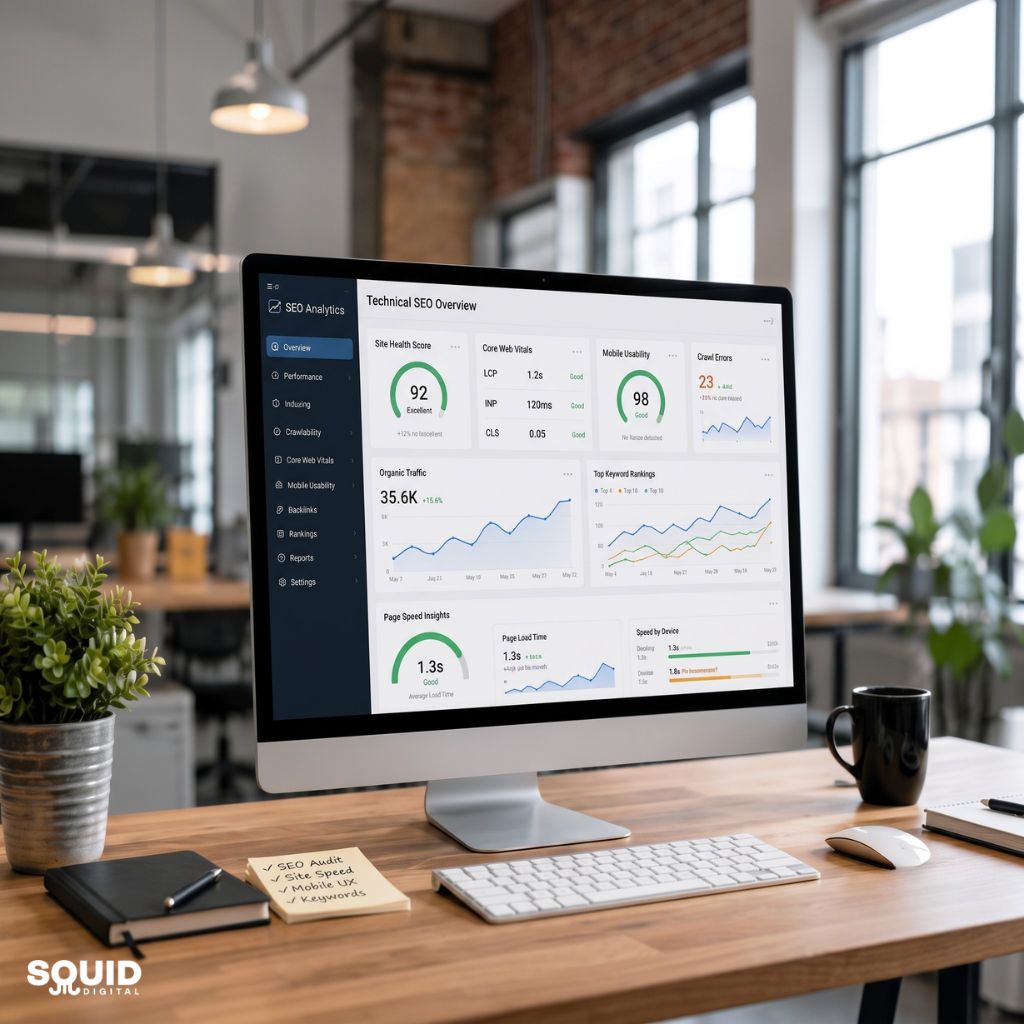


Practical Local SEO Strategy for Small Business Growth
Introduction
A practical local SEO strategy for small business growth helps businesses become more visible when potential customers search for products or services in their area. Whether someone is searching for a local plumber, accountant, café, dentist, or real estate agency, appearing prominently in local search results can directly influence enquiries, bookings, and sales.
Local search has become a key part of how customers discover businesses. Many consumers now use Google Search and Google Maps before making purchasing decisions, often comparing several local providers before contacting one. For small businesses competing against larger brands with bigger marketing budgets, local SEO offers an opportunity to attract highly relevant customers without relying solely on paid advertising.
The good news is that local SEO does not require a complex strategy to generate results. By focusing on the right local keywords, optimising your Google Business Profile, maintaining accurate business information, and creating useful local content, small businesses can significantly improve their online visibility.
This guide explains how local SEO works, why it matters, and how to build a practical local SEO strategy that supports sustainable business growth.
What Is a Local SEO Strategy and Why Does It Matter?
A local SEO strategy is a structured approach to improving a business’s visibility in location-based search results. It focuses on helping potential customers find your business when searching for products or services within a specific area.
Unlike traditional SEO, which often targets broader audiences, local SEO focuses on geographic relevance. The goal is to connect businesses with customers who are actively looking for nearby solutions.
Understanding Local SEO in Simple Terms
Local SEO is the process of optimising your online presence to appear in local search results.
For example, when someone searches:
- “electrician in Sydney”
- “best coffee shop near me”
- “accountant in Melbourne”
Google uses location signals to determine which businesses are most relevant.
A strong local SEO strategy combines website optimisation, business listings, customer reviews, and local authority signals to improve visibility.
Where Local SEO Appears in Search Results
Local SEO influences several areas of Google’s search ecosystem.
Google Business Profile Listings
Google Business Profile allows businesses to display important information, including:
- Business name
- Address
- Phone number
- Opening hours
- Reviews
- Photos
Local Pack (Map Pack)
The Local Pack appears near the top of search results and displays a map alongside several local businesses.
Appearing here often generates more clicks and calls than traditional organic listings.
Organic Local Search Results
Below the Local Pack, businesses can also rank through their websites for local search terms.
These rankings are influenced by content quality, authority, relevance, and user experience.
Why Small Businesses Cannot Ignore Local Search
Local search is closely connected to customer intent.
When users perform local searches, they are often:
- Ready to make a purchase
- Looking for immediate solutions
- Comparing nearby providers
- Seeking trusted businesses
For small businesses, this means local SEO can generate qualified traffic rather than simply increasing visitor numbers.
Key Takeaways
- Local SEO connects businesses with nearby customers.
- Searchers often have strong buying intent.
- Local visibility can generate enquiries, calls, and bookings.
- Small businesses can compete effectively without large advertising budgets.
How Local Search Influences Customer Decisions
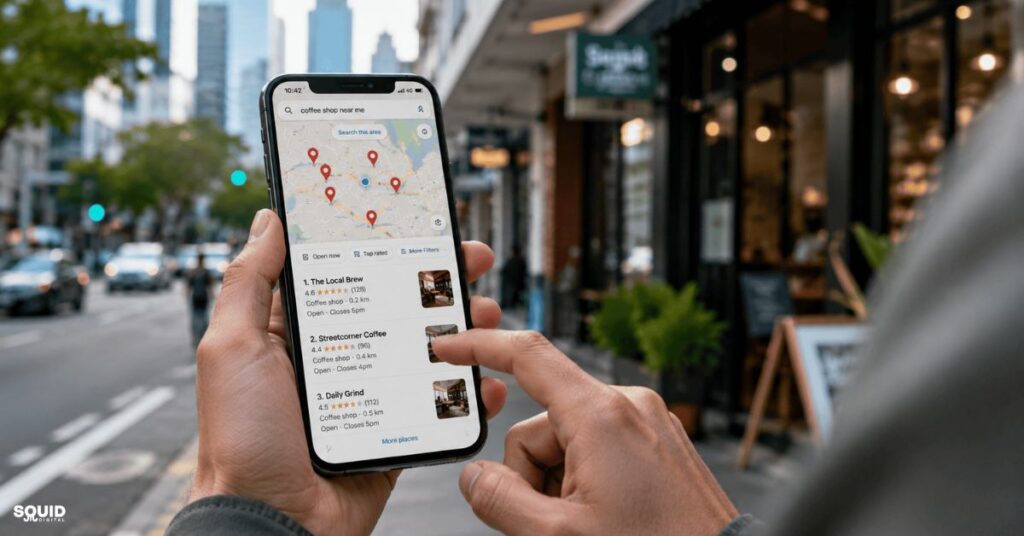
Local search directly affects how consumers evaluate and choose businesses.
Customers rarely contact the first business they find without comparison. Instead, they assess visibility, reviews, website quality, and overall trustworthiness.
The Modern Local Customer Journey
Most local customers follow a predictable path before making contact.
Discovery
The customer searches for a local service or product.
Evaluation
They compare businesses based on:
- Reviews
- Ratings
- Website quality
- Business information
Contact
The customer calls, submits an enquiry, or requests directions.
Purchase
The customer books a service or makes a purchase.
Businesses that appear prominently throughout this process have a higher chance of conversion.
Key Local Ranking Factors
| Ranking Factor | Why It Matters | Impact Level |
|---|---|---|
| Google Business Profile | Primary local visibility signal | High |
| Reviews and ratings | Builds trust and relevance | High |
| Website optimisation | Supports local relevance and user experience | High |
| Local citations | Confirms business information consistency | Medium |
| Local backlinks | Strengthens authority and credibility | Medium |
| User engagement signals | Indicates popularity and usefulness | Medium |
Benefits of a Strong Local SEO Presence
A well-executed local SEO strategy can support multiple business goals.
Benefits include:
- Increased website traffic
- More phone enquiries
- Improved brand awareness
- Greater customer trust
- Higher conversion rates
- Better visibility against competitors
An important industry trend is the continued growth of mobile searches. Many consumers now discover local businesses through smartphones, making local search visibility more valuable than ever.
Building a Practical Local SEO Strategy for Small Business Growth
The most effective local SEO strategies are built around clear goals and consistent execution.
Step 1: Define Your Local Service Area
Identify where your customers are located.
This may include:
- Specific suburbs
- Cities
- Regions
- Service zones
Understanding your service area helps guide keyword targeting and content creation.
Step 2: Research Local Keywords
Look for search terms that combine services with locations.
Examples include:
Examples of Local Keyword Types
- accountant in Sydney
- emergency plumber near me
- best café in Melbourne
- local electrician Brisbane
- family dentist Perth
Focus on keywords that reflect customer intent rather than search volume alone.
Step 3: Analyse Local Competitors
Study businesses already ranking in local search results.
Review:
- Their Google Business Profile
- Website content
- Reviews
- Service pages
- Local backlinks
This often reveals opportunities that competitors have overlooked.
Step 4: Set Measurable Local SEO Goals
Effective goals may include:
- Increasing local traffic
- Improving Local Pack rankings
- Generating more enquiries
- Growing Google Business Profile interactions
Experience shows that businesses that set measurable objectives typically make better optimisation decisions because progress can be tracked and refined over time.
The Essential Local SEO Checklist for Small Businesses
A successful local SEO strategy depends on consistent execution. While there are many ranking factors, focusing on the fundamentals often delivers the biggest results for small businesses.
Google Business Profile Optimisation

Your Google Business Profile is one of the most important local SEO assets.
Ensure you:
- Complete every business detail
- Select the most accurate business categories
- Add services and products
- Upload high-quality photos
- Publish regular business updates
- Monitor and respond to reviews
An incomplete profile can reduce visibility and trust, even if your website is well optimised.
Website Optimisation for Local Search
Your website helps Google understand what you do and where you operate.
Focus on:
- Location-focused service pages
- Optimised title tags and meta descriptions
- Clear internal linking
- Mobile-friendly design
- Fast loading speeds
For example, a plumber serving multiple suburbs may benefit from dedicated pages for each service area rather than relying on a single generic services page.
Local Citation Management
Local citations are online mentions of your business information.
Consistency is critical.
NAP Information
Ensure your:
- Name
- Address
- Phone Number
remain identical across all platforms.
Even small inconsistencies can create confusion for search engines and customers.
Review Management
Reviews influence both rankings and customer trust.
Encourage genuine reviews from satisfied customers and respond professionally to all feedback.
A thoughtful response to a negative review can often build more trust than several positive reviews.
Quick-Win Checklist
If you’re starting today, focus on these practical actions:
- Claim and verify your Google Business Profile
- Add local business schema to your website
- Create location-specific service pages
- Audit existing directory listings
- Request reviews from recent customers
- Optimise page titles with local keywords
Section Recap
- Optimise your Google Business Profile completely.
- Maintain consistent business information.
- Build location-focused website content.
- Generate and manage customer reviews.
- Focus on foundational improvements before advanced tactics.
Turning Local Visibility Into Real Business Growth
Local SEO is most valuable when it produces measurable business outcomes.
Example: Local Service Business
Consider a small electrical contractor operating in Sydney’s western suburbs.
Before Local SEO
The business relied primarily on referrals and repeat customers.
Challenges included:
- Limited online visibility
- Few website enquiries
- Inconsistent lead generation
After Implementing a Local SEO Strategy
The business implemented several improvements:
- Optimised Google Business Profile
- Created suburb-specific service pages
- Requested reviews after completed jobs
- Updated directory listings
Outcome
Within several months, the business experienced:
- Increased visibility in local search results
- More Google Business Profile interactions
- Higher website traffic
- More qualified enquiries from nearby customers
This example demonstrates how local SEO can support sustainable growth without significantly increasing advertising spend.
Practical Applications Across Different Industries
| Business Type | Local SEO Opportunity |
|---|---|
| Plumber | Emergency service searches |
| Accountant | Location-based service searches |
| Dentist | Google Maps visibility |
| Café | Local discovery searches |
| Real Estate Agency | Area-specific landing pages |
| Trades Business | Service suburb targeting |
Different industries may apply local SEO differently, but the objective remains the same: connect with nearby customers actively searching for solutions.
Common Local SEO Mistakes That Limit Growth

Many small businesses struggle with local SEO because they overlook basic optimisation opportunities.
Ignoring Google Business Profile Updates
An outdated profile can reduce customer confidence.
Common issues include:
- Incorrect opening hours
- Missing services
- Outdated photos
- Unanswered reviews
Targeting Broad Keywords Only
Many businesses pursue highly competitive keywords without considering local intent.
For example:
- “electrician” is broad
- “electrician in Parramatta” is targeted
Location-specific searches often convert better because they match customer intent.
Inconsistent Business Information
Different phone numbers, addresses, or business names across directories can weaken local trust signals.
Regular audits help maintain consistency.
Neglecting Reviews
Reviews are both a ranking factor and a trust signal.
Businesses that fail to request reviews often lose opportunities to improve visibility and credibility.
Creating Thin Location Pages
Location pages should provide useful information for local customers.
Avoid:
- Duplicate content
- Minimal information
- Keyword stuffing
Instead, include relevant services, local insights, customer examples, and area-specific information.
Common Mistakes Summary
- Incomplete Google Business Profiles
- Weak local keyword targeting
- Inconsistent NAP information
- Poor review management
- Low-quality location pages
Measuring the Success of Your Local SEO Strategy

Local SEO should be measured using meaningful business metrics rather than rankings alone.
Important Metrics to Track
Monitor:
- Local keyword rankings
- Organic website traffic
- Google Business Profile views
- Phone calls
- Direction requests
- Contact form submissions
- Enquiries and bookings
Tracking these metrics helps determine whether visibility is translating into business growth.
Useful Local SEO Tools
Several free and paid tools can support ongoing optimisation.
Useful options include:
- Google Search Console
- Google Analytics
- Google Business Profile Insights
- Local rank tracking software
These tools provide valuable data about search performance and customer interactions.
Signs Your Strategy Is Working
Positive indicators include:
- Improved local search visibility
- Increased website traffic
- More customer enquiries
- Growth in reviews
- Higher conversion rates
One emerging trend is the growing importance of engagement signals. Businesses that regularly update profiles, respond to reviews, and publish useful content often perform better over time.
Frequently Asked Questions
How long does local SEO take to show results?
Most businesses begin seeing improvements within three to six months. Results depend on competition, website quality, and the level of optimisation already in place.
What is the difference between local SEO and regular SEO?
Local SEO focuses on location-based searches and nearby customers, while traditional SEO often targets broader audiences regardless of location.
Do small businesses really need a Google Business Profile?
Yes. A Google Business Profile is one of the most influential local ranking factors and helps customers find important business information quickly.
How many customer reviews should a local business have?
There is no specific number. Consistently acquiring genuine reviews is more important than reaching a particular target.
Can local SEO work without a physical storefront?
Yes. Service-area businesses such as plumbers, electricians, and consultants can still benefit from local SEO by defining service locations within their profiles.
What are local citations in SEO?
Local citations are online mentions of your business name, address, and phone number. They help search engines verify business legitimacy and consistency.
How often should a local SEO strategy be updated?
Review your local SEO performance monthly and perform a broader strategy review every quarter to identify new opportunities.
Which local SEO factor has the biggest impact on rankings?
Google Business Profile optimisation, customer reviews, website relevance, and business information consistency are generally among the most influential factors.
Creating Sustainable Local Growth Through SEO
A practical local SEO strategy for small business growth is not about chasing rankings alone. It is about increasing visibility where potential customers are actively searching and making it easier for them to choose your business.
The most successful local SEO strategies combine strong Google Business Profile optimisation, local keyword targeting, consistent business information, quality reviews, and useful website content. Together, these elements improve trust, relevance, and search visibility.
While local SEO requires ongoing attention, the long-term benefits can be significant. Businesses that consistently invest in local optimisation often generate more enquiries, strengthen their reputation, and build a sustainable source of qualified leads.
Strengthening Your Local Presence One Step at a Time
Start by reviewing your Google Business Profile, checking the accuracy of your business information, and identifying opportunities to improve local visibility. Small, consistent improvements can create meaningful growth over time and help more local customers discover your business.
Explore how our team can support your business growth through practical SEO strategies and tailored digital marketing solutions at Squid Digital Contact Page
Stay updated with practical SEO, Google Ads, and business growth strategies by following our newsletter on LinkedIn Newsletter